Let’s be real: inboxes are chaos.
Every day, brands compete for attention, and most emails get ignored, deleted, or unsubscribed from in seconds. But some newsletters still manage to get opened, read, clicked, and even looked forward to.
That’s not luck. That’s psychology.
The best newsletters understand what makes people curious, what builds trust, and what keeps readers coming back. In this guide, we break down 16 newsletter examples that work and the psychological triggers behind them, so you can borrow the tactics for your own emails.
What Makes a Great Newsletter?
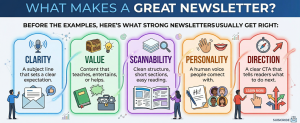
Before the examples, here’s what strong newsletters usually get right:
- Clarity: A subject line that sets a clear expectation
- Value: Content that teaches, entertains, or helps
- Scannability: Clean structure, short sections, easy reading
- Personality: A human voice people connect with
- Direction: A clear CTA that tells readers what to do next
That’s the base. Everything else builds on top of it.
- Community & Belonging
Some newsletters work because they make readers feel like part of something.
- We Are Travel Girls creates ritual and identity with “Wanderlust Wednesday.”
- BBC History invites readers to contribute memories, making them part of the content.
- Girls’ Night In sells a feeling of comfort and calm, not just recommendations.
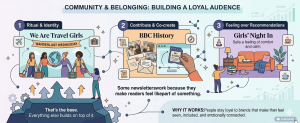
Why it works: People stay loyal to brands that make them feel seen, included, and emotionally connected.
- Teaching Without Feeling Like Homework
The best educational newsletters make readers feel smarter fast.
- Marketing Examples uses screenshots and short commentary instead of long explanations.
- Why We Buy breaks down one bias at a time, making readers notice it everywhere.
- Billie teaches a useful skill first, then naturally introduces the product.
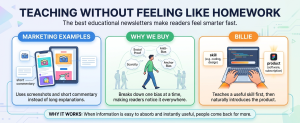
Why it works: When information is easy to absorb and instantly useful, people come back for more.
- Selling Without Sounding Salesy
The smartest promotional emails don’t feel like hard sells.
- Estrid uses plain-text, human-sounding emails that build trust.
- Javvy Coffee uses mystery and blurred images to spark clicks.
- The Atlantic keeps it simple by recommending just one story.
- Kosas pairs customer reviews with the exact products mentioned.
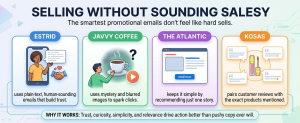
Why it works: Trust, curiosity, simplicity, and relevance drive action better than pushy copy ever will.
- Making the Newsletter an Experience
Some newsletters win because they’re fun.
- Morning Brew turns business news into a habit with humor, quizzes, and games.
- The Sill uses an interactive flowchart to guide product choices.
- Chubbies makes every email feel like it came from a funny friend.
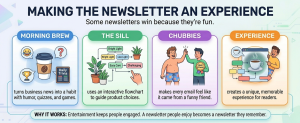
Why it works: Entertainment keeps people engaged. A newsletter people enjoy becomes a newsletter they remember.
- Leading With Value
The best long-term strategy? Give more than you ask.
- Robinhood Snacks delivers useful insights without constantly pushing the product.
- Accept Cookies feels like a thoughtful note from a real person.
- Skillshare highlights creators and values in a way that feels genuine.
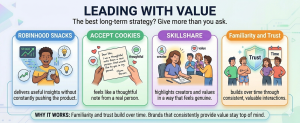
Why it works: Familiarity and trust build over time. Brands that consistently provide value stay top of mind.
What These Examples Teach Us
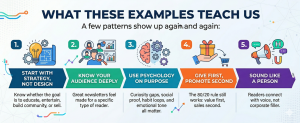
A few patterns show up again and again:
- Start with strategy, not design
Know whether the goal is to educate, entertain, build community, or sell. - Know your audience deeply
Great newsletters feel made for a specific type of reader. - Use psychology on purpose
Curiosity gaps, social proof, habit loops, and emotional tone all matter. - Give first, promote second
The 80/20 rule still works: value first, sales second. - Sound like a person
Readers connect with voice, not corporate filler.
Conclusion
The best newsletters don’t fight for attention by being louder. They win by being more useful, more human, and more memorable. They respect the reader’s time. They offer something worth opening. And they understand that great email is less about broadcasting and more about building a relationship.
That’s the real takeaway from these examples. You don’t need to copy them exactly. Just take one tactic — curiosity, community, simplicity, personality, or value-first content — and test it in your next send.
Because strong newsletters aren’t built in one go.
They’re built issue by issue, with consistency, clarity, and a real understanding of what readers actually care about.