The “AI summer” of the early 2020s has officially evolved into a full-scale climate shift.
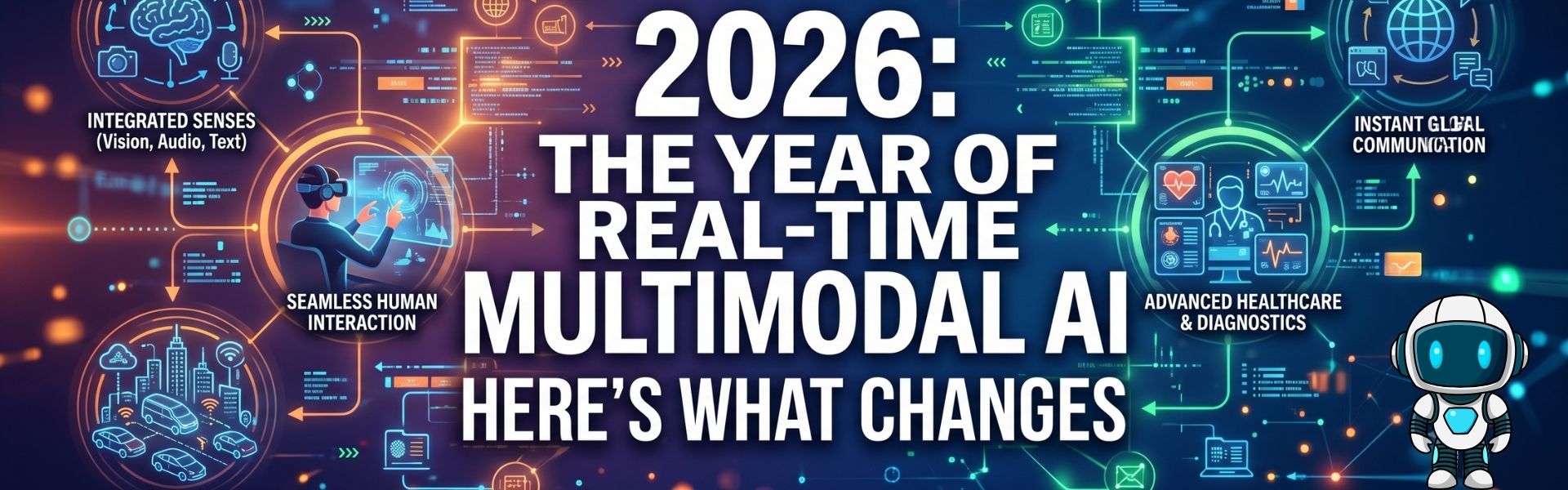
If 2023 was the year of the chatbot and 2024 was the year of the agent, 2026 is undeniably the year of Real-Time Multimodal AI.
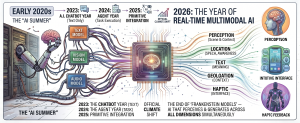
We have moved past the era of “Frankenstein models”—systems where a text model was crudely stitched to a vision model. Today, AI doesn’t just “see” or “hear” as an afterthought; it perceives and generates across every sensory dimension simultaneously.
Generative AI Has Gone Multimodal & Real-Time
The biggest shift this year isn’t just what AI can do, but how fast it does it. We’ve hit the holy grail of latency: human-equivalent response times across all media.
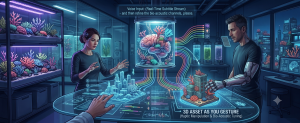
In 2026, the friction between thought and digital creation has effectively vanished. We are no longer waiting for a “generating…” progress bar for a video or a 3D asset. It’s happening as you speak, as you gesture, and as you think.
What’s New: The “Omni-Model” Standard
The landscape is now dominated by true hybrids that handle video, audio, 3D, and text as a single, unified language.
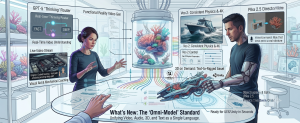
- GPT-5 & the “Thinking” Routers: OpenAI’s latest flagship doesn’t just guess the next word; it uses a real-time router to switch between “fast” intuitive responses and “deep” reasoning modes. It handles live video streams as effortlessly as text, allowing it to act as a literal set of eyes for the visually impaired or a real-time coach for a mechanic fixing a complex engine.
- Veo 2 & Pika 2.5: High-fidelity video generation has moved from “cool clips” to “functional reality.” Veo 2 can now generate 4K cinematic sequences with consistent physics—water splashes, fabric drapes, and light reflections behave exactly as they should. Meanwhile, Pika 2.5 has mastered the “Director Mode,” allowing creators to edit objects inside a live video stream with simple voice commands.
- 3D on Demand: We’ve seen a massive leap in text-to-3D. Developers are now generating entire, rigged game assets in seconds, ready to be dropped into Unreal Engine 6 or Unity.
How This Changes Your Daily Life
The transition to real-time multimodality is fundamentally altering three major pillars of our world:
- Education: The “Infinite Tutor”
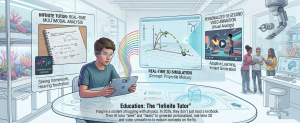
Imagine a student struggling with physics. In 2026, they don’t just read a textbook. Their AI tutor “sees” the student’s homework via their tablet camera, “hears” the frustration in their voice, and instantly generates a real-time 3D simulation to explain the concept. If the student still doesn’t get it, the AI creates a personalized 10-second video animation on the fly to illustrate the point.
- Creative Work: The End of the “Mundanity”
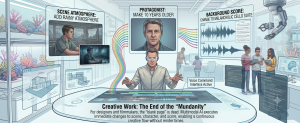
For designers and filmmakers, the “blank page” is dead. A director can now sit in a virtual space and say, “Add a rainy atmosphere to this scene, make the protagonist look 10 years older, and change the background score to a melancholic cello suite.” The AI executes all of these multimodal changes instantly, allowing for a “flow state” that was previously impossible when waiting for render times.
- Professional Productivity: Agentic Coworkers
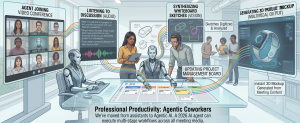
We’ve moved from assistants to Agentic AI. These systems don’t just draft emails; they execute workflows. A 2026 AI agent can:
- Join a meeting via video.
- Listen to the discussion (audio).
- Synthesize the whiteboard sketches (vision).
- Update the project management board and generate a 3D mockup of the discussed product (multimodal output).
The Reality Check: New Challenges
With great power comes… well, a lot of new headaches. 2026 isn’t just about the “wow” factor; it’s about governance.

- The Authenticity Crisis: With real-time video and audio generation being this perfect, “seeing is no longer believing.” We are seeing a massive push for C2PA (Content Provenance and Authenticity) standards to track what is human and what is “synthetic.”
- Energy and Ethics: Running these “Omni-models” requires staggering amounts of compute. The industry is currently split between those pushing for bigger models and those perfecting Edge AI—running these multimodal marvels locally on your phone to save on latency and power.
The Bottom Line
2026 marks the moment AI stopped being a tool we use and started being an environment we inhabit.
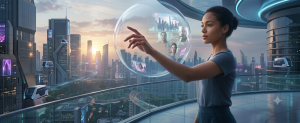
The “real-time” nature of these models means the loop between human intent and digital reality has finally closed.