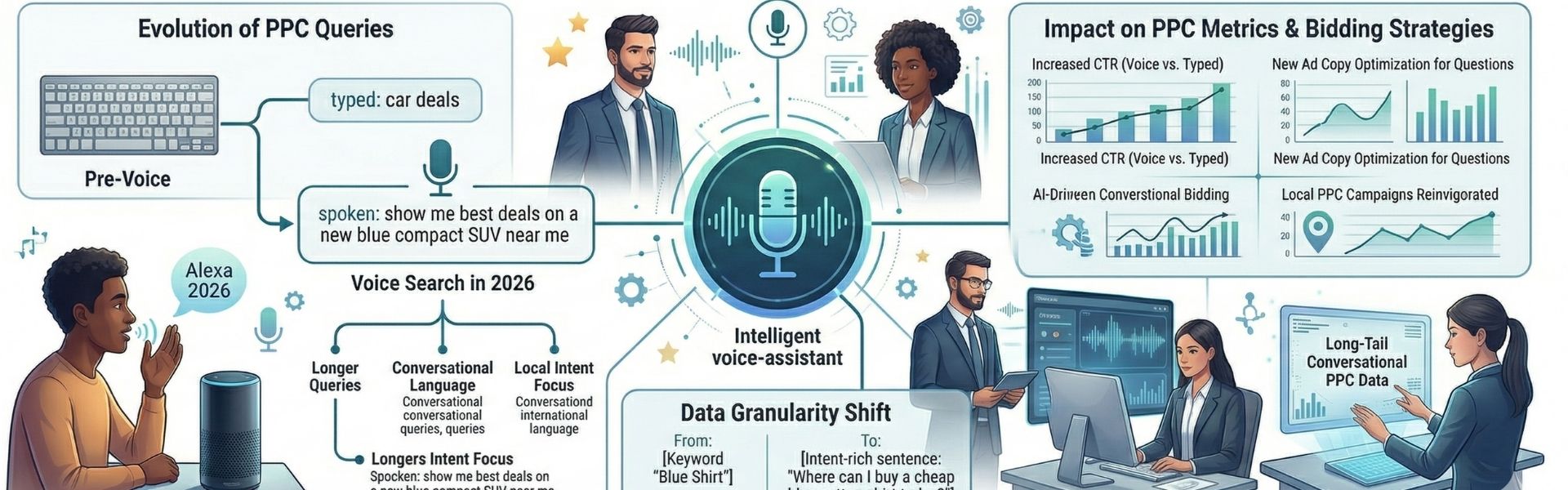
Search marketing has changed. If you’ve checked a Google Ads Search Term Report lately, you’ve probably noticed that search queries no longer look neat and predictable.
Instead of short phrases like “best running shoes” or “mortgage rates NYC,” you’re now seeing long, conversational searches that sound like people talking to their phones.
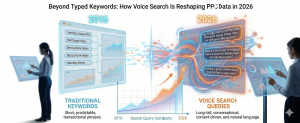
2026: “best running shoes for flat feet under $100 near me”
That’s because in 2026, voice search is changing how people search, how Google reads intent, and how PPC data should be interpreted.
The Shift from Keywords to Conversations
Typed searches used to be short and direct. Voice searches are different. They are longer, more natural, and often framed as questions. Instead of typing “coffee maker review,” someone might say, “What’s the best coffee maker for strong espresso under $200?”
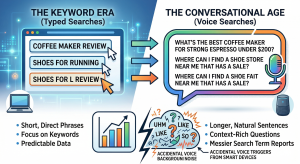
These voice queries carry more context, but they also create messier data. Search Term Reports now include filler words, question phrases, and even accidental voice triggers from smart devices.
Why Traditional PPC Tactics Are Struggling
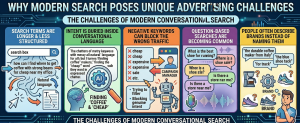
Old PPC strategies were built around short keywords, predictable match types, and simple negative keyword lists. That approach doesn’t work as well anymore.
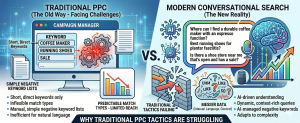
Here’s why:
- Search terms are longer and less structured
- Intent is buried inside conversational language
- Negative keywords can block the wrong traffic
- Question-based searches are becoming more common
- People often describe brands instead of naming them
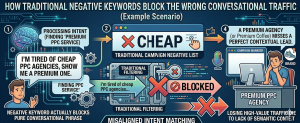
For example, a user may say, “I’m tired of cheap PPC agencies, show me a premium one.” A traditional negative keyword like “cheap” could wrongly block that search, even though the person is actually looking for a high-end service.
What PPC Marketers Need to Do Now
To stay competitive, advertisers need to stop thinking only in keywords and start thinking in intent.

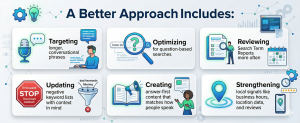
A better approach includes:
- Targeting longer, conversational phrases
- Optimizing for question-based searches
- Reviewing Search Term Reports more often
- Updating negative keyword lists with context in mind
- Creating answer-first content that matches how people speak
- Strengthening local signals like business hours, location data, and reviews
New Metrics Matter More
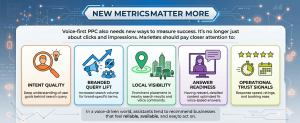
Voice-first PPC also needs new ways to measure success. It’s no longer just about clicks and impressions. Marketers should pay closer attention to:
- Intent quality
- Branded query lift
- Local visibility
- Answer readiness
- Operational trust signals like response speed, ratings, and booking ease
In a voice-driven world, assistants tend to recommend businesses that feel reliable, available, and easy to act on.
The Bottom Line
Voice search is not a side trend. It is reshaping search behavior and changing what PPC data looks like. The marketers who win in 2026 will not be the ones obsessed with exact-match keywords. They’ll be the ones who understand real language, real intent, and real conversations.
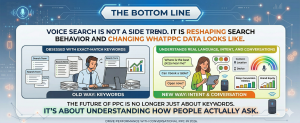
Because the future of PPC is no longer just about keywords.
It’s about understanding how people actually ask.