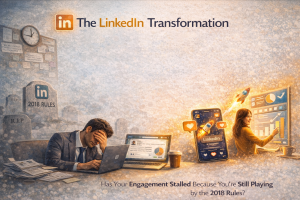
For years, LinkedIn was the “online resume”—a stiff, corporate landscape filled with buzzword-heavy updates and awkward humblebrags. But lately, something has shifted.
The feed is no longer a graveyard of press releases. It has become the most powerful organic distribution engine for B2B brands. If your engagement has stalled, it’s likely because you’re still playing by the 2018 rules.
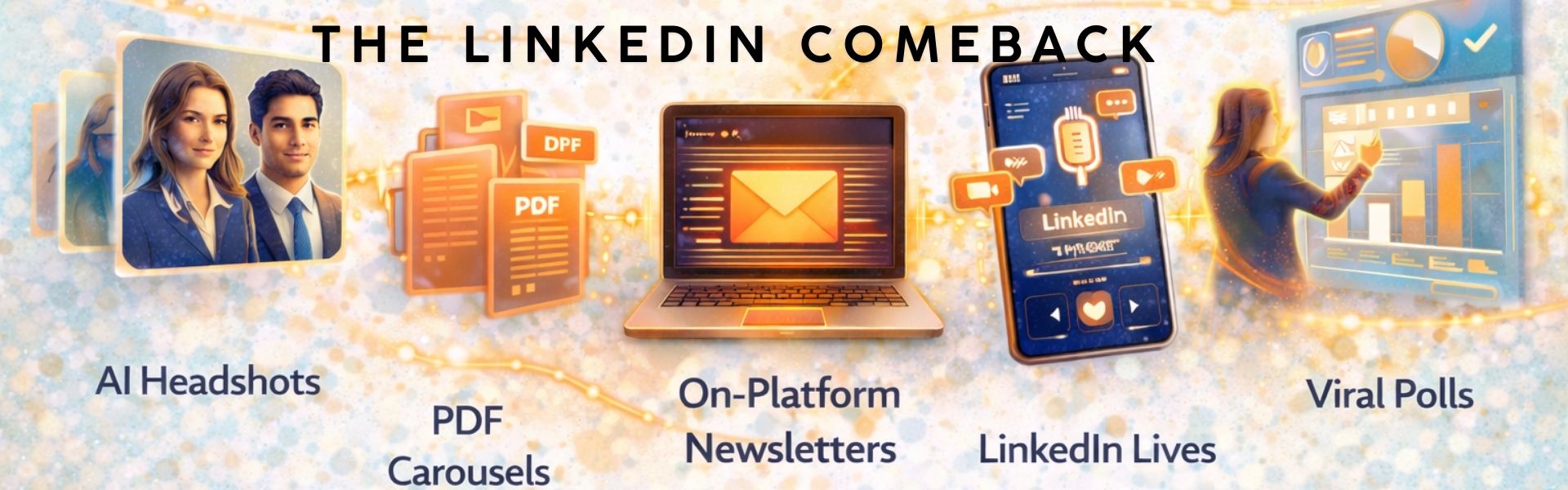
Here is why LinkedIn is back and the 5 specific content formats that are winning the algorithm right now.
- Why LinkedIn Is Making a Big Comeback
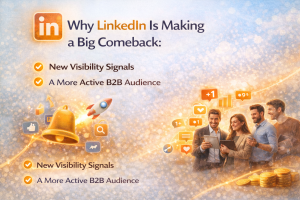
The platform is experiencing a renaissance. The transition from Corporate to Authentic means users are craving real insights over polished PR statements.
- New Visibility Signals: The LinkedIn algorithm now prioritizes “Dwell Time” and “Meaningful Comments.” It rewards content that starts a conversation rather than content that just gets a mindless “Like.”
- A More Active B2B Audience: Decision-makers aren’t just checking LinkedIn once a week anymore; they are using it daily to consume industry news and vet potential partners.
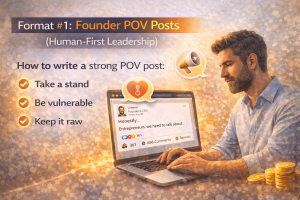
- Format #1: Founder POV Posts (Human-First Leadership)
People buy from people, not logos. Founder POV (Point of View) posts are currently the highest-performing content type on the platform.
How to write a strong POV post:
- Take a stand: Share a non-obvious opinion on an industry trend.
- Be vulnerable: Discuss a specific failure and exactly what you learned.
- Keep it raw: Avoid the corporate “we.” Use “I” and speak as if you’re having coffee with a peer.
- Format #2: Screenshot Carousels (The “Raw” PDF)
You don’t need a graphic designer to win on LinkedIn. In fact, high-production carousels are often outperformed by simple, raw screenshots compiled into a PDF slider.
Why raw screens work:
They feel immediate and authentic. A screenshot of a Slack conversation, a dashboard metric, or a handwritten note feels like a “peek behind the curtain” that polished slides can’t replicate.
Best screenshots to share:
- A client compliment (with permission).
- A “Before vs. After” of a project.
- A screenshot of a simple process that saves you time.

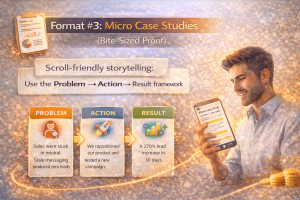
- Format #3: Micro Case Studies (Bite-Sized Proof)
Traditional case studies are 10-page PDFs that no one reads. Micro case studies are 150-word posts that prove your expertise in seconds.
Scroll-friendly storytelling:
Use the Problem → Action → Result framework.
“Our client was losing $5k/month on ads (Problem). We cut 3 keywords and rebuilt the landing page (Action). Sales jumped 20% in 14 days (Result).”
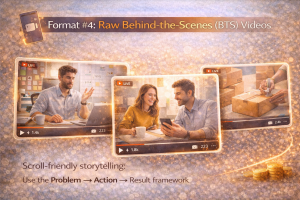
- Format #4: Raw Behind-the-Scenes (BTS) Videos
The era of $10,000 corporate videos is over. Vertical, raw, handheld video captured on a smartphone is the new gold standard for B2B trust.
Ideas for real BTS content:
- A 30-second tour of your morning routine.
- A “Quick Tip” recorded while walking to a meeting.
- A screen-recording explaining a specific niche feature of your product.
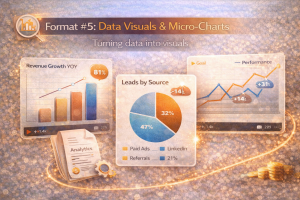
- Format #5: Data Visuals & Micro-Charts
Decision-makers are busy. If you can communicate a complex industry trend in a single, simple chart, it will be shared aggressively.
Turning data into visuals:
You don’t need complex data sets. Turn a simple survey or a recurring industry observation into a basic bar chart or line graph using tools like Canva or even Excel screenshots. Simple = Viral.
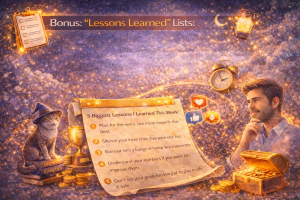
- Bonus: “Lessons Learned” Lists
Numbered lists are the ultimate snackable content. They go viral because they promise high value for low effort.
- When to use them: Every Friday or Sunday evening. Summarize the 5 biggest lessons from your week to help others avoid the same mistakes.
- Building a High-Engagement Content Mix
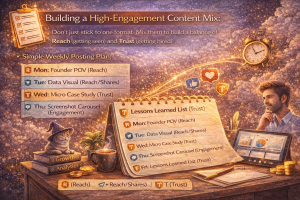
Don’t just stick to one format. Mix them to build a balance of Reach (getting seen) and Trust (getting hired).
Simple Weekly Posting Plan:
- Mon: Founder POV (Reach)
- Tue: Data Visual (Reach/Shares)
- Wed: Micro Case Study (Trust)
- Thu: Screenshot Carousel (Engagement)
- Fri: Lessons Learned List (Trust)
- Common Engagement Killers
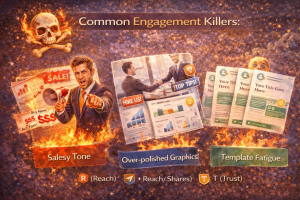
- Salesy Tone: If your post sounds like a brochure, people will scroll past.
- Over-polished Graphics: If it looks like an ad, users treat it like an ad (they ignore it).
- Template Fatigue: Avoid the “I am honored to announce…” opening. It’s a signal to stop reading.
- The LinkedIn 7-Day Engagement Sprint
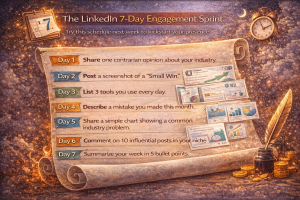
Try this schedule next week to kickstart your presence:
- Day 1: Share one contrarian opinion about your industry.
- Day 2: Post a screenshot of a “Small Win.”
- Day 3: List 3 tools you use every day.
- Day 4: Describe a mistake you made this month.
- Day 5: Share a simple chart showing a common industry problem.
- Day 6: Comment on 10 influential posts in your niche.
- Day 7: Summarize your week in 5 bullet points.